

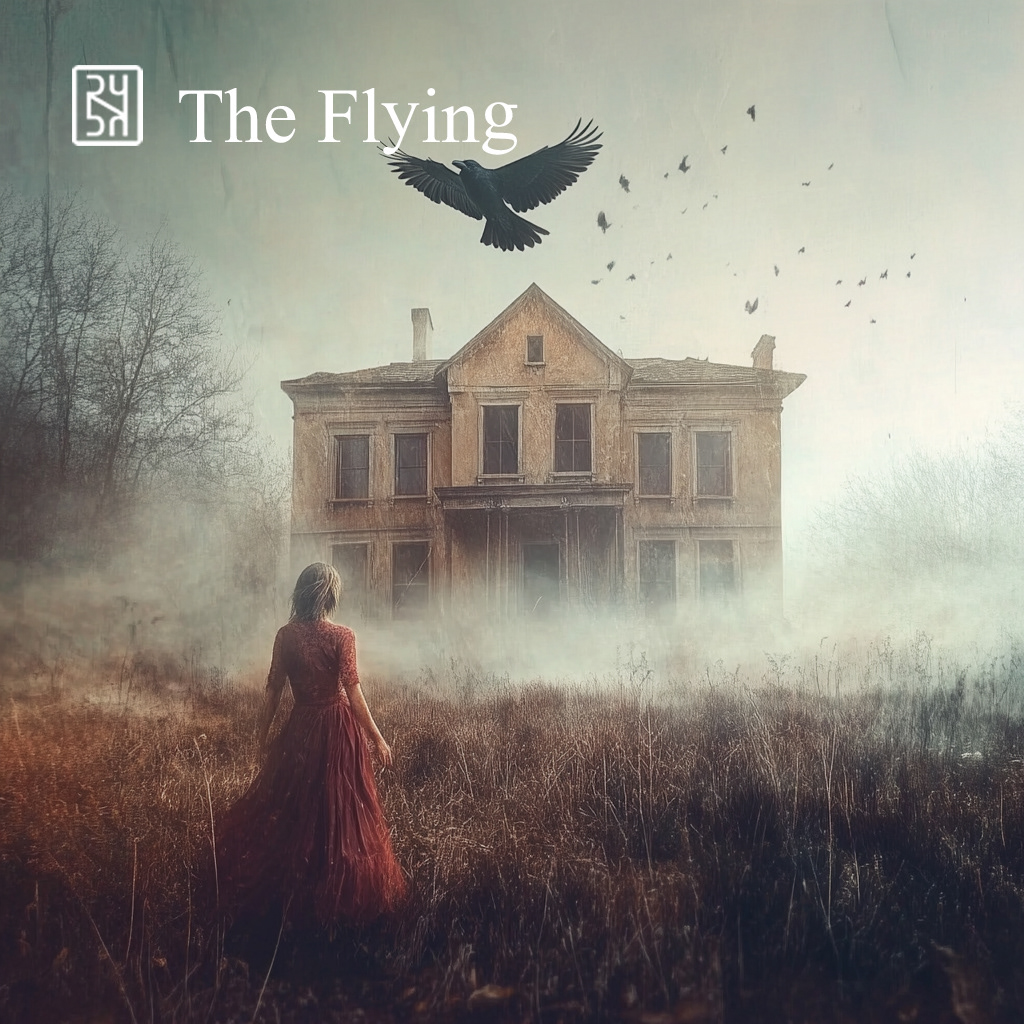
Oh, bird of my soul, fly away now,
For I possess a hundred fortified towers.
Rumi
Julia had always been a friend to birds. Since she was little, she liked to observe their strange movements. She grew up in the countryside, and chickens were her faithful companions during her childhood. She watched them walk clumsily, always looking at the ground for worms, with their spasmodic movements, vacant and expressionless eyes, and guttural clucking. Above all, she was drawn to observing that apparent air of dislocation, as if they were beings lost in time and space. She felt pity, curiosity, and perhaps a bit of fear for them.
When Julia was about six years old, her mother, Sue, gave her a chick. She had never become particularly attached to anything, but this little chick, which she named Gus, turned out to be her perfect friend; she played with him, fed him, cared for him diligently, bathed him, and carried him around as if he were a baby. She even put a bow on his head and pretended he was a lady coming to have tea with her. She wished Gus would behave with more dignity, but she couldn't deny that she liked seeing him run frantically with the pink bow in his beak, knocking over the tea table and spilling the water and cups. She simply found his ridiculous appearance and supreme confusion very funny; she would run after him, laughing uncontrollably.
On the afternoon of Julia's ninth birthday, her grandmother came to visit. She was an old and reserved person with a past that was never discussed or shared by her mother. All that was known was that the grandmother belonged to a time long forgotten, to a generation whose ways and customs had nothing to do with Julia's world. The distance between them was immense and insurmountable.
Her grandmother cared for Julia, but she couldn't express it appropriately. For the birthday, the grandmother couldn't think of a better idea than to make a homemade chicken stew.
Julia, who was playing and running around the yard looking for her chick Gus, could never have guessed the scene awaiting her around the corner of the yard. Seeing her grandmother with a bloody knife and her favourite chick with a broken and exposed neck marked the end of her childhood. Her illusion and innocence floated away in that blood that flowed, mixing with tears of incomprehensible bitterness, black waters that drowned her heart and the little empathy she had left for the humans she called family.
After this incident, things changed considerably in Julia's house. To begin with, eating chicken or even eggs had become a strictly taboo subject. But the most serious consequence was that the resentment and deep sorrow that Julia harbored in her soul from that fateful day never left her, making her antisocial and distrustful, and above all, a very unhappy and sad child.
Julia was aware that the only thing motivating her days was remembering Gus, particularly his eyes, and how, in their apparent and empty transparency, she found a strange solace when thinking about them. Over time, other types of birds, like pigeons and finches, began to appear in Julia's mental space. Her mother had given her a drawing kit, and thus, in an attempt to capture that antediluvian otherness, she found an effective way to bring to reality her yearning to warm the coldness of those soulless and shiny eyes that obsessed her.
She spent many afternoons getting lost in the paths of the surrounding pine forest until she found some lost bird. She then tried to capture it with her gaze and with her pencils. She consumed it intensely, wanting to depict every corner of every feather, every greyish colour, every iridescent note, every scale on those sharp talons they had as feet, every fold of light. She internally prayed to connect with that black and shiny pupil, that abyss of prehistoric emptiness that made her feel a deep and unfathomable sadness. She often wondered if there was a place where she could be happy.
Julia's obsession grew over time, although she called it a hobby. Her mother watched her the same way Julia watched the birds: with a mixture of feelings and astonished confusion.
One rainy afternoon, a crow entered the house kitchen and settled in the middle of the table. Julia, who was drawing a parrot, was amazed to see it. That night she dreamed of the crow. She knew that an ancient crow had inspired many stories and poems, but she never imagined she would see one so close. She dreamed that the crow came to find her, watched her with its black and sinister eye, and told her mythical stories of times when there were no cities, and crows flew between stone walls and fires that gathered distant and small men in circles. When condors and eagles flew together in open skies, where the soul of the earth flowed like wind through the empty bones of the birds.
In her dreams, the crow beckoned Julia to follow, whispering of a hidden realm beyond the pine forests. There, it promised, she would encounter something elusive yet strangely familiar, a key to mending her deepest sorrow. But as the dreams unfolded, they twisted into nightmares, leaving her adrift in a sea of mysterious sensations and conflicting emotions.
Night after night, the dreams with the crow grew longer, and Julia found it increasingly difficult to wake up from them. The black eye of the crow was an omniscient circle that encompassed everything, and its caw echoed in her mind, falling into that abysmal darkness in spirals that turned towards the unknown.
The morning dawned, and the roosters announced it with particular hysteria. As Julia missed her breakfast, Sue entered her room and looked for her, called her insistently, but couldn't find her anywhere. Panicked, she went out to look for her outside the house. Not without first, —and it was a detail that later seemed very curious to her, — having to open the window to let out a small brown sparrow that, inexplicably, had somehow gotten into the room.
----------------------------------------------------------------------------------------------------------------------------------------------------------------
Oh, pájaro de mi alma, vuela ahora,
pues poseo cien torres fortificadas.
— Rumi
pues poseo cien torres fortificadas.
— Rumi
Julia siempre había sido amiga de los pájaros. Desde pequeña, le gustaba observar sus extraños movimientos. Creció en el campo, y las gallinas fueron sus fieles compañeras durante la infancia. Las veía caminar torpemente, siempre mirando al suelo en busca de gusanos, con sus movimientos espasmódicos, sus ojos vacíos y carentes de expresión, y su cacareo gutural. Sobre todo, le llamaba la atención esa aparente sensación de desorientación, como si fueran seres perdidos en el tiempo y el espacio. Sentía por ellas lástima, curiosidad y quizá un poco de miedo.
Cuando Julia tenía unos seis años, su madre, Sue, le regaló un pollito. Nunca se había encariñado especialmente con nada, pero aquel pequeño polluelo, al que llamó Gus, se convirtió en su amigo perfecto. Jugaba con él, lo alimentaba, lo cuidaba con esmero, lo bañaba y lo llevaba consigo como si fuera un bebé. Incluso le ponía un lazo en la cabeza y fingía que era una dama que venía a tomar el té con ella. Deseaba que Gus se comportara con más dignidad, pero no podía negar que le divertía verlo correr frenéticamente con el lazo rosado en el pico, derribando la mesa de té y derramando el agua y las tazas. Su apariencia ridícula y su suprema confusión le parecían simplemente hilarantes; corría tras él, riendo sin control.
La tarde del noveno cumpleaños de Julia, su abuela vino de visita. Era una mujer anciana y reservada, con un pasado del que su madre nunca hablaba ni compartía. Lo único que se sabía era que la abuela pertenecía a un tiempo ya olvidado, a una generación cuyas costumbres y maneras no tenían nada que ver con el mundo de Julia. La distancia entre ellas era inmensa e insalvable.
Su abuela la quería, pero no sabía expresarlo adecuadamente. Para el cumpleaños, no se le ocurrió mejor idea que preparar un guiso casero de pollo.
Julia, que jugaba en el patio corriendo en busca de su pollito Gus, nunca podría haber imaginado la escena que la esperaba al doblar la esquina. Ver a su abuela con un cuchillo ensangrentado y a su querido pollito con el cuello roto y expuesto marcó el fin de su infancia. Su ilusión y su inocencia flotaron en aquella sangre que corría, mezclándose con lágrimas de una amargura incomprensible, aguas negras que ahogaron su corazón y la poca empatía que le quedaba hacia los humanos que llamaba familia.
Después de aquel incidente, las cosas cambiaron considerablemente en la casa de Julia. Para empezar, comer pollo o incluso huevos se convirtió en un tema estrictamente tabú. Pero la consecuencia más grave fue que el resentimiento y la profunda tristeza que Julia albergó en su alma desde aquel fatídico día nunca la abandonaron, volviéndola antisocial y desconfiada, y sobre todo, una niña muy infeliz y triste.
Julia era consciente de que lo único que le daba sentido a sus días era recordar a Gus, en particular sus ojos, y cómo, en su aparente y vacía transparencia, encontraba un extraño consuelo al pensar en ellos. Con el tiempo, otro tipo de aves, como palomas y pinzones, comenzaron a aparecer en el espacio mental de Julia. Su madre le había regalado un kit de dibujo, y así, en un intento de capturar esa otredad antediluviana, encontró una forma efectiva de hacer realidad su anhelo de calentar la frialdad de esos ojos sin alma y brillantes que la obsesionaban.
Pasaba muchas tardes perdiéndose en los senderos del pinar cercano hasta encontrar algún pájaro extraviado. Entonces intentaba capturarlo con la mirada y con sus lápices. Lo consumía con intensidad, deseando retratar cada rincón de cada pluma, cada tonalidad grisácea, cada nota tornasolada, cada escama de esas afiladas garras que tenían por pies, cada pliegue de luz. Rezaba internamente por conectar con esa pupila negra y brillante, ese abismo de vacío prehistórico que le hacía sentir una tristeza profunda e insondable. A menudo se preguntaba si existía algún lugar donde pudiera ser feliz.
La obsesión de Julia creció con el tiempo, aunque ella la llamaba un pasatiempo. Su madre la observaba del mismo modo en que Julia observaba a los pájaros: con una mezcla de sentimientos y una confusión asombrada.
Una tarde lluviosa, un cuervo entró en la cocina de la casa y se posó en medio de la mesa. Julia, que estaba dibujando un loro, quedó maravillada al verlo. Esa noche soñó con el cuervo. Sabía que un cuervo ancestral había inspirado muchas historias y poemas, pero nunca imaginó que vería uno tan de cerca. Soñó que el cuervo había venido a buscarla, que la observaba con su ojo negro y siniestro y le contaba historias míticas de tiempos en los que no existían ciudades, y los cuervos volaban entre muros de piedra y fogatas que reunían a hombres lejanos y diminutos en círculos. Cuando cóndores y águilas surcaban juntos cielos abiertos, donde el alma de la tierra fluía como el viento a través de los huesos vacíos de las aves.
En sus sueños, el cuervo llamaba a Julia a seguirlo, susurrándole sobre un reino oculto más allá del bosque de pinos. Allí, le prometía, encontraría algo elusivo pero extrañamente familiar, una clave para remendar su pena más profunda. Pero a medida que los sueños avanzaban, se retorcían en pesadillas, dejándola a la deriva en un mar de sensaciones misteriosas y emociones contradictorias.
Noche tras noche, los sueños con el cuervo se hacían más largos, y a Julia le resultaba cada vez más difícil despertar de ellos. El ojo negro del cuervo era un círculo omnisciente que lo abarcaba todo, y su graznido resonaba en su mente, cayendo en esa oscuridad abismal en espirales que giraban hacia lo desconocido.
La mañana amaneció, y los gallos la anunciaron con particular histeria. Como Julia no bajó a desayunar, Sue entró a su habitación y la buscó, la llamó insistentemente, pero no la encontró en ninguna parte. Desesperada, salió a buscarla fuera de la casa. No sin antes —y fue un detalle que después le pareció muy curioso— haber tenido que abrir la ventana para dejar salir a un pequeño gorrión pardo que, inexplicablemente, de alguna manera había logrado entrar en la habitación.